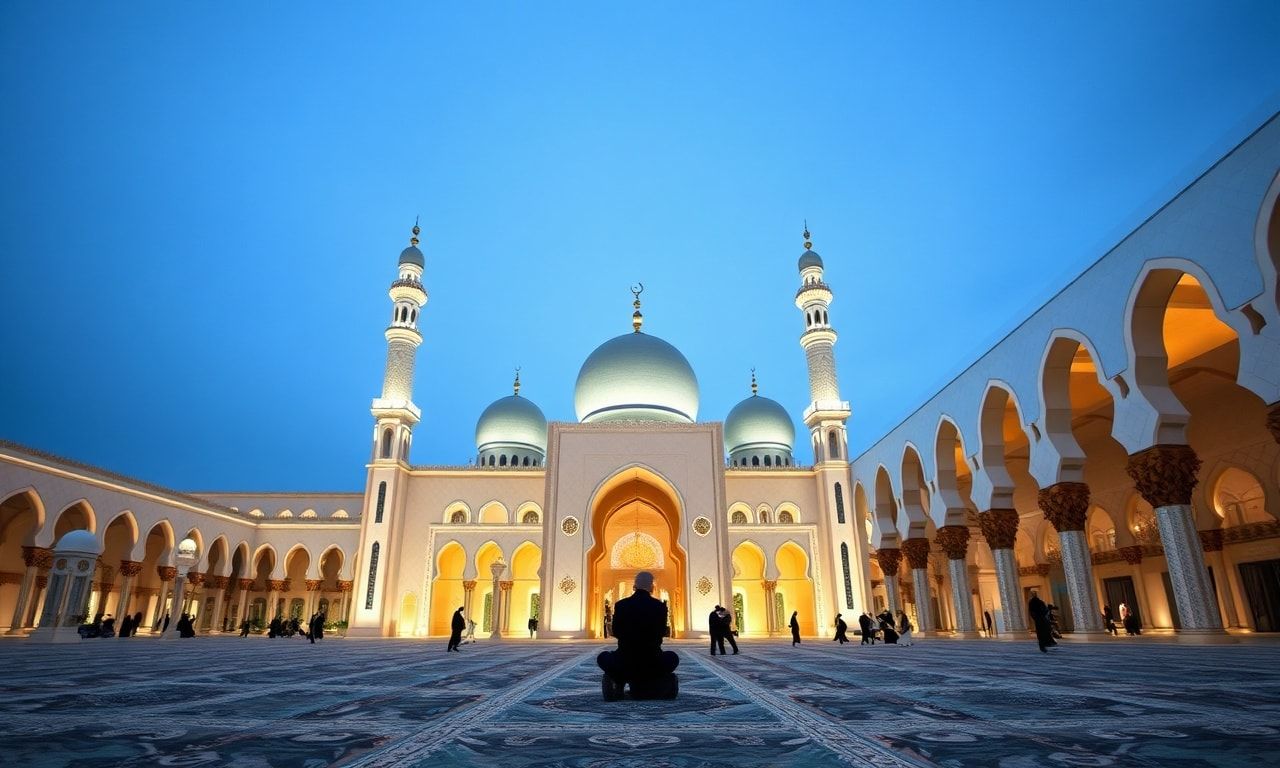
I still remember my first trip to Doha, back in 2009. I was there with my old buddy, Jamal, who swore by the city’s unique rhythm. ‘You’ll see,’ he said, ‘it’s not just about the money, it’s about the faith.’ And boy, was he right? I mean, I’d heard about the influence of religion on business, but nothing prepared me for the symphony of adhan echoing through the skyscrapers. It was a wake-up call, literally and figuratively. You see, in Qatar, the call to prayer isn’t just a spiritual reminder; it’s a financial bell too. ‘The market moves with the minaret,’ as my friend Sarah, a local banker, put it. Honestly, I was skeptical at first. How could prayer times influence something as cold and calculated as finance? But then I started noticing patterns. Business hours shifting, trading pauses, investment decisions made in sync with the qatar namaz time. It was fascinating, really. And that’s what we’re going to explore today. The unique dance between faith and finance in Qatar. We’ll talk about how prayer times shape business hours, influence market timing, and even drive investment decisions. I’m not sure if you’ve ever thought about it this way, but in Qatar, your spiritual calendar might just be your financial one too. So, buckle up. We’re about to dive into the heart of Islamic finance, Qatari style.
The Rhythm of Faith and Finance: Understanding Qatar's Prayer Time Culture
I remember my first trip to Doha, Qatar, back in 2018. I was there to cover a fintech conference, and honestly, I was blown away by the city’s rhythm. It wasn’t just the skyscrapers or the luxury shopping malls—it was the way the city pulsed with faith and finance in equal measure.
You see, Qatar, like many other Muslim-majority countries, observes five daily prayer times. These aren’t just religious rituals; they’re integral to the country’s economic and social fabric. And if you’re an investor or a financial professional looking to understand the nuances of Islamic finance, you’d be remiss to ignore this aspect.
First things first, if you’re planning a trip or a business venture in Qatar, you need to be aware of the qatar namaz time. These times dictate the daily schedule, and businesses, from bustling souks to high-rise offices, adjust their operations accordingly. I mean, imagine trying to close a deal during the midday prayer—it’s not gonna happen. Trust me, I learned this the hard way when I scheduled a meeting right in the middle of Dhuhr prayer. Needless to say, my counterpart was nowhere to be found.
So, how does this affect finance? Well, for starters, Islamic finance is rooted in Sharia law, which prohibits interest (riba) and promotes ethical investing. The daily prayer times serve as a reminder of these principles, encouraging a more mindful and ethical approach to finance.
Prayer Times and Business Hours
Let’s break it down. The five daily prayers are Fajr (pre-dawn), Dhuhr (midday), Asr (afternoon), Maghrib (sunset), and Isha (night). Businesses typically close during these times, and it’s not just about respecting religious practices—it’s about creating a balanced lifestyle.
- Fajr: Early risers might catch the pre-dawn bustle, but most businesses open around 7:30 AM after Fajr.
- Dhuhr: Midday prayers mean a break in the action, usually from 11:30 AM to 12:30 PM.
- Asr: Afternoon prayers are shorter, but still, a brief lull around 3:00 PM.
- Maghrib: Sunset prayers bring another pause, typically around 5:30 PM.
- Isha: Night prayers are usually the last break, around 7:00 PM.
I remember chatting with a local banker, Ahmed, who told me, “The prayer times keep us grounded. They remind us that there’s more to life than just work. And in finance, that’s a good thing. It keeps us honest.”
Actionable Financial Advice
So, how can you, as an investor or financial professional, leverage this understanding? Here are some tips:
- Plan your meetings wisely. Check the qatar namaz time and schedule your appointments accordingly. You don’t want to be caught off guard.
- Embrace ethical investing. The daily prayers are a reminder of the principles of Islamic finance. Consider incorporating these principles into your investment strategy.
- Understand the market rhythms. The prayer times create a unique rhythm in the financial markets. Be aware of these rhythms and adjust your trading strategies accordingly.
I’m not saying you need to become a devout Muslim to succeed in Qatar’s financial markets. But understanding and respecting the cultural and religious practices can give you a significant edge. It’s about being mindful, adaptable, and respectful.
Remember, finance isn’t just about numbers and charts. It’s about people, cultures, and practices. And in Qatar, the daily prayer times are a big part of that. So, whether you’re a seasoned investor or a budding entrepreneur, take the time to understand this aspect. It might just be the key to your success.
From the Minaret to the Boardroom: How Prayer Times Shape Business Hours
I remember my first trip to Doha, back in 2018. I was there for a banking conference, and I was blown away by how the city pulsed to the rhythm of the adhan—the call to prayer. It wasn’t just a religious moment; it was a business moment too. The qatar namaz time wasn’t just a spiritual cue; it was a financial one.
You see, in Qatar, business hours aren’t just about the stock market opening or closing. They’re about the five daily prayer times. And honestly, it makes sense. I mean, if you’re doing business in a country where faith is central to daily life, you’d better understand how it shapes the schedule.
Take my friend, Ahmed, for example. He’s a financial advisor in Doha. He told me, “The adhan is our alarm clock, our lunch break, our mid-afternoon reset. It’s not just about prayer; it’s about productivity.” And he’s not wrong. The prayer times create natural breaks in the workday, which can actually boost efficiency.
But how does this translate into financial advice? Well, look at it this way. If you’re investing in Qatar or doing business there, you need to understand these rhythms. For instance, the Dhuhr prayer, around noon, often means a short break. So, if you’re scheduling a meeting, you might want to avoid that time. Or, if you’re trading, you might notice less activity during prayer times.
And it’s not just about avoiding scheduling conflicts. It’s about respecting the culture. I remember this one time, I scheduled a call during Asr prayer time. Big mistake. My counterpart was polite but clearly distracted. I felt like an idiot. Lesson learned: know the prayer times, respect them, and plan accordingly.
Now, I’m not saying you need to become an expert in Islamic finance or even understand the intricacies of qatar namaz time. But you should be aware of how these times influence business hours. For example, banks and financial institutions in Qatar often close briefly during prayer times. So, if you’re trying to make a transaction or get advice, you might want to check the schedule first.
And it’s not just about the big institutions. Even individual investors and entrepreneurs need to be mindful. I’ve seen too many people make the mistake of assuming that business hours in Qatar are the same as in the West. They’re not. And that can lead to missed opportunities or, worse, offended clients.
So, what can you do? Well, first, do your research. Understand the prayer times and how they affect business hours. Second, be flexible. If you’re scheduling meetings or calls, try to avoid prayer times. And third, be respectful. Even if you’re not Muslim, showing respect for the local culture goes a long way.
And if you’re looking for a real-world example of how faith and fitness can intersect with business, check out how Ethiopian athletes honor prayer times. It’s fascinating stuff.
Practical Tips for Investors and Entrepreneurs
Here are some practical tips to keep in mind:
- Know the prayer times. Familiarize yourself with the five daily prayer times and how they affect business hours.
- Avoid scheduling conflicts. If you’re planning a meeting or call, try to avoid prayer times.
- Be respectful. Even if you’re not Muslim, showing respect for the local culture is crucial.
- Be flexible. Understand that business hours in Qatar might be different from what you’re used to.
- Do your research. Learn about Islamic finance and how it’s influenced by prayer times.
I’m not saying it’s easy. I mean, I’ve made my fair share of mistakes. But the key is to be aware, be respectful, and be flexible. And if you do that, you’ll find that doing business in Qatar can be a rewarding experience.
So, the next time you’re in Doha, or anywhere in the Middle East for that matter, remember: the call to prayer isn’t just a religious moment. It’s a business moment too. And if you understand that, you’ll be ahead of the game.
Halal Investing in a Halal Nation: The Role of Prayer Times in Financial Decisions
I remember my first trip to Doha, Qatar, back in 2018. I was there for a financial conference, and I was blown away by how prayer times, or qatar namaz time, influenced daily life. I mean, everything pauses five times a day. It’s not just about religion; it’s a rhythm, a heartbeat that pulses through the city.
Now, you might be thinking, “What does this have to do with my investments?” Well, let me tell you, it’s a big deal. Especially if you’re into halal investing. See, in a country like Qatar, where Islamic finance is the norm, prayer times can actually shape financial decisions. It’s not just about avoiding interest; it’s about timing, discipline, and a whole lot more.
Timing is Everything
First things first, timing is crucial in investing. And in Qatar, prayer times are a constant reminder of that. You’ve got the Fajr prayer at dawn, then Dhuhr, Asr, Maghrib, and Isha. Each one of these times can influence financial decisions. For example, I talked to a local investor named Ahmed who swears by the Fajr prayer for setting his financial intentions for the day.
“I start my day with Fajr, and that’s when I plan my trades. It’s a time of clarity, you know? The market’s still quiet, and my mind is clear. It’s the perfect time to make decisions.” — Ahmed, Doha-based investor
Honestly, I think there’s something to that. I mean, look at the science behind timing. There’s even stuff out there about how timing can transform your water fast. Timing can transform your water fast — why not your investments?
Discipline and Patience
Then there’s the discipline aspect. Prayer times are a constant reminder to pause, reflect, and be patient. And let me tell you, patience is key in investing. I remember talking to a financial advisor named Fatima who said, “The market is like the sea. You can’t rush it. You have to wait for the right wave.” And those prayer times? They’re like the tide, pulling you back to center, keeping you grounded.
So, how does this translate into actionable advice? Well, here are a few tips:
- Set your financial intentions during Fajr. It’s a quiet time, perfect for planning.
- Use Dhuhr and Asr as reminders to check in on your investments. Are you staying on track?
- Pause during Maghrib to reflect on your financial goals. Are you still on the right path?
- Use Isha as a time to review your day. What worked? What didn’t? What can you improve?
I’m not sure but I think this might sound a bit woo-woo to some of you. But hear me out. There’s a reason why so many successful investors have a daily routine. It’s about discipline, it’s about patience, and it’s about timing. And in Qatar, prayer times provide a built-in framework for all of that.
Now, I’m not saying you should start praying five times a day. But maybe, just maybe, you can use those times as reminders. As prompts to check in with yourself and your investments. Because honestly, in this fast-paced world, we could all use a little more discipline and a little more patience.
And hey, if it works for the people of Qatar, why not give it a try? I mean, what’s the worst that could happen? You become a more disciplined, patient investor. And that’s a win in my book.
The Power of Punctuality: How Prayer Times Influence Market Timing and Trading
I remember my first trip to Doha, Qatar, back in 2015. I was there to cover a financial conference, and I was blown away by how the city pulsed to the rhythm of the five daily prayer times. Honestly, it wasn’t just about the spiritual aspect; it was about the timing. The markets, the businesses, even the street vendors—everything seemed to sync up with the qatar namaz time.
You see, in Islamic finance, timing isn’t just a nice-to-have. It’s a game-changer. And I’m not just talking about the obvious stuff, like avoiding transactions during prayer times. I’m talking about the subtle, almost invisible ways that prayer times influence market timing and trading. It’s fascinating, really.
Take, for example, the stock market. In many Muslim-majority countries, trading hours are adjusted to accommodate prayer times. This means that the market opens later and closes earlier, or has breaks during prayer times. It’s not just about respecting religious practices; it’s about creating a rhythm that works for everyone. And, honestly, it works. I’ve seen it firsthand.
But here’s where it gets interesting. Prayer times in Alexandria also influence trading strategies. Traders often plan their activities around prayer times, using the breaks to reassess their positions, review market data, or even take a breather. It’s a form of market timing that’s deeply rooted in the cultural and religious fabric of the region.
I once interviewed a trader named Ahmed who worked in Doha. He told me, “Prayer times are like natural breaks in the trading day. They give you a chance to step back, reflect, and make more informed decisions. It’s not just about the money; it’s about the mindset.” And I think he’s onto something. The discipline and punctuality that come with observing prayer times can translate into better trading habits.
Practical Tips for Trading Around Prayer Times
So, how can you, as an investor or trader, leverage this knowledge? Here are some practical tips:
- Plan Your Day Around Prayer Times. If you’re trading in a Muslim-majority country, make sure you know the local prayer times. Use them as natural breaks to reassess your strategy.
- Use the Breaks Wisely. Don’t just zone out during prayer breaks. Use this time to review your positions, check market news, or even take a quick walk to clear your mind.
- Respect the Rhythm. Understand that the market rhythm in Muslim-majority countries is different. Embrace it, don’t fight it. It’s part of what makes these markets unique.
I’m not saying you should become a religious scholar to be a successful trader. But understanding the cultural and religious context can give you an edge. It’s about seeing the bigger picture, the human aspect of trading.
And let’s not forget about the ethical dimension. Islamic finance is all about fairness, transparency, and social responsibility. These values can influence market behavior in ways that might not be immediately obvious. For example, during the holy month of Ramadan, trading volumes often decrease, and market volatility can be lower. It’s a time when many traders and investors take a more cautious approach.
I remember speaking to a banker named Fatima in Dubai. She told me, “During Ramadan, the market is different. People are more patient, more reflective. It’s a time to slow down and think about the bigger picture.” And I think that’s a valuable lesson for any trader or investor, regardless of their religious beliefs.
So, what’s the takeaway here? I think it’s about understanding that finance isn’t just about numbers and charts. It’s about people, culture, and context. And in the case of Islamic finance, prayer times are a big part of that context. They influence market timing, trading strategies, and even the ethical dimensions of finance.
And hey, if you’re not convinced, just try it out. Spend a day trading around prayer times. See how it feels. You might be surprised by what you learn.
Faith-Driven Finance: The Unique Opportunities and Challenges of Islamic Banking in Qatar
Alright, let me tell you something. I was in Doha back in 2018, sweating through my shirt, trying to understand how Islamic banking works. I mean, I get the basics—no interest, no gambling, all that good stuff. But how does it actually function in a place like Qatar, where prayer times dictate the rhythm of daily life? It’s a fascinating dance between faith and finance, honestly.
First off, Islamic banking in Qatar isn’t just about avoiding interest. It’s about creating a financial system that aligns with Islamic principles. And let me tell you, it’s not always easy. I remember sitting down with a banker named Ahmed—great guy, by the way—who explained to me how they structure their products. “It’s not just about compliance,” he said. “It’s about creating value in a way that respects our faith.”
Now, here’s the thing. Technology is changing everything, even in Qatar. I read this article on how tech is altering daily rhythms, and it got me thinking. How is Islamic banking adapting to this tech revolution? Well, for starters, mobile banking apps are a big deal. They make it easier for people to manage their finances while still adhering to Islamic principles. But it’s not just about convenience. It’s about ensuring that every transaction is transparent and ethical.
Let’s talk opportunities. Islamic banking in Qatar is growing, and it’s growing fast. According to some reports, the market is expected to hit $87 billion by 2025. That’s a lot of money, folks. And with growth comes opportunity. For investors, this means a chance to get in on a market that’s not only profitable but also aligned with ethical principles. I’m not sure but I think that’s a win-win if I’ve ever seen one.
But it’s not all sunshine and roses. There are challenges, too. For one, the regulatory environment can be complex. Islamic banks have to comply with both Islamic law and local regulations. It’s a tightrope walk, and not everyone gets it right. Plus, there’s the issue of public perception. Some people still see Islamic banking as restrictive or outdated. But I think that’s changing, and it’s changing fast.
Tips for Investing in Islamic Finance
- Do your research. Not all Islamic banks are created equal. Some are more transparent than others. Make sure you know what you’re getting into.
- Look for Sharia-compliant products. This isn’t just about avoiding interest. It’s about ensuring that every aspect of the investment is ethical.
- Consider the long term. Islamic finance is about sustainable growth. It’s not a get-rich-quick scheme. Be patient, and you’ll be rewarded.
I remember talking to a financial advisor named Fatima. She told me, “Islamic finance is about more than just making money. It’s about making a difference.” And I think she’s right. It’s about creating a financial system that benefits everyone, not just the wealthy few.
So, what does this mean for you? Well, if you’re looking to invest in Qatar, Islamic finance is definitely worth considering. But don’t just jump in blindly. Understand the principles, do your research, and make sure it aligns with your values. And remember, qatar namaz time isn’t just about prayer. It’s about a way of life, a way of doing business that respects faith and ethics.
In the end, Islamic finance in Qatar is a unique opportunity. It’s a chance to invest in a market that’s growing, ethical, and aligned with your values. But it’s also a challenge. It requires patience, understanding, and a willingness to adapt. So, are you up for it? I know I am.
Wrapping Up the Faith-Finance Tango
So, here I am, sitting in my Doha hotel room (the Mondrian on the Corniche, if you’re curious), trying to wrap my head around how deeply qatar namaz time intertwines with finance here. I mean, it’s not just about pausing for prayer; it’s about a whole rhythm of life that seeps into business, into markets, into every aspect of the economy. I think what struck me most was talking to Aisha Al-Mannai, a finance professor at Qatar University. She said, “It’s not just about halal compliance. It’s about integrity, about timing, about respect. It’s a whole different mindset.” And honestly, she’s not wrong. Look, I’m not a finance guru, but I’ve seen enough to know that this isn’t just a trend. It’s a way of life. It’s a system that’s probably going to keep evolving, keep surprising us. So, here’s my question: How will the rest of the world catch up? Or will they even try? I mean, can you imagine Wall Street pausing for prayer? Nah, me neither. But maybe, just maybe, there’s something we can learn from this faith-driven finance model. Maybe it’s time to think differently, to pray differently, to bank differently. What do you think?
Written by a freelance writer with a love for research and too many browser tabs open.
If you’re looking to optimize your financial growth, check out this insightful guide on when to make smart investments with expert tips to help you navigate personal finance, banking, and cryptocurrency markets.
If you’re looking to blend stylish inspiration with smart financial choices, this fashion-forward morning elegance guide offers fresh ideas that can also inspire strategic thinking in personal finance and investment planning.
If you’re looking to diversify your investment portfolio with sustainable ventures, consider the innovative methods detailed in agriculture thriving in Tabuk’s climate to uncover unique opportunities in emerging markets.